Protecting the Monkeys of Cape Verde
Objectives and Actions
OBJ. 1: RESCUE ABANDONED, INJURED, ABUSED MONKEYS, OR THOSE SURRENDERED BY OWNERS OR AUTHORITIES
Operating the Rehabilitation Centre to care for orphaned, injured, or abandoned monkeys and other wildlife in danger:
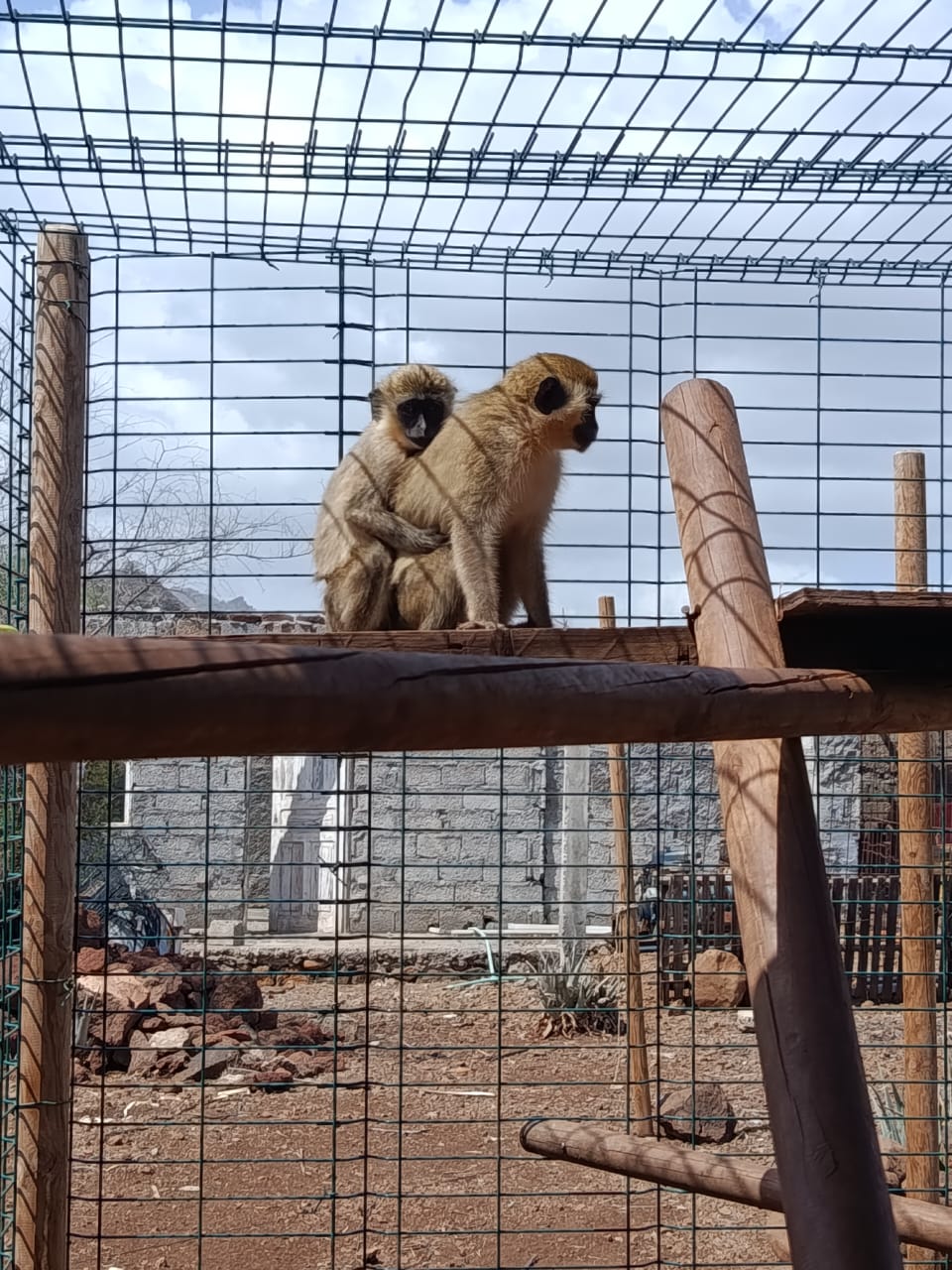
The Rehabilitation Centre serves as a vital sanctuary and temporary haven for injured, sick, abandoned, orphaned, or abused monkeys. We provide round-the-clock, 24/7 veterinary care and dedicated attention to individual animals that would otherwise perish in the wild. Our goal is to accommodate 20 to 30 monkeys.
Run by a dedicated team of staff and passionate volunteers, the centre also takes in other distressed wildlife whenever needed, offering them a secure habitat with ample space before transitioning them to a sanctuary or releasing them back into their wild home to live out their lives in peace, whenever possible.
Establishing an on-site veterinary clinic to treat monkeys and provide emergency care to any wildlife in distress:
The veterinary clinic will deliver both lifesaving and preventive medical care, equipped to carry out diagnostic tests and perform urgent, minor surgical interventions.
A skilled animal care team fully equipped to rescue, transport, and handle monkeys safely:
Our organization consistently rallies resources to train staff and procure specialized rescue gear. Our rehabilitation centres partner directly with national authorities, stepping in to safely rescue stray monkeys or those seized through court orders. Every rescue must strictly guarantee the animal's safety, carried out by a highly trained team equipped with the proper tools.
An educational hub dedicated to monkey protection and biodiversity conservation in Cape Verde:
By welcoming controlled visitor access, the Rehabilitation Centre stands as a powerful platform to raise awareness about primate protection, biodiversity preservation, and the urgent climate crisis threatening the survival of both wildlife and humanity. The centre educates and inspires every visitor.
OBJ. 2: COMBATING MONKEY ABUSE AND EXPLOITATION
Grassroots awareness campaigns against monkey abuse:
Our awareness campaigns are designed to enlighten, inspire, and mobilize both the public and national authorities around the critical plight of these primates. Organized strategically, these actions roll out across a focused two-year communications roadmap.
Field investigations into captive monkeys on Santiago Island:
Right now, there is a severe lack of data regarding captive monkeys and the conditions they endure. Reliable, concrete information is vital to evaluate health risks and map the true scale of primates held in captivity. Our investigations track down captive monkeys, inspect their welfare conditions, and educate owners on essential welfare standards and the legal consequences of animal cruelty.
Whistleblowing and taking legal action against monkey abuse:
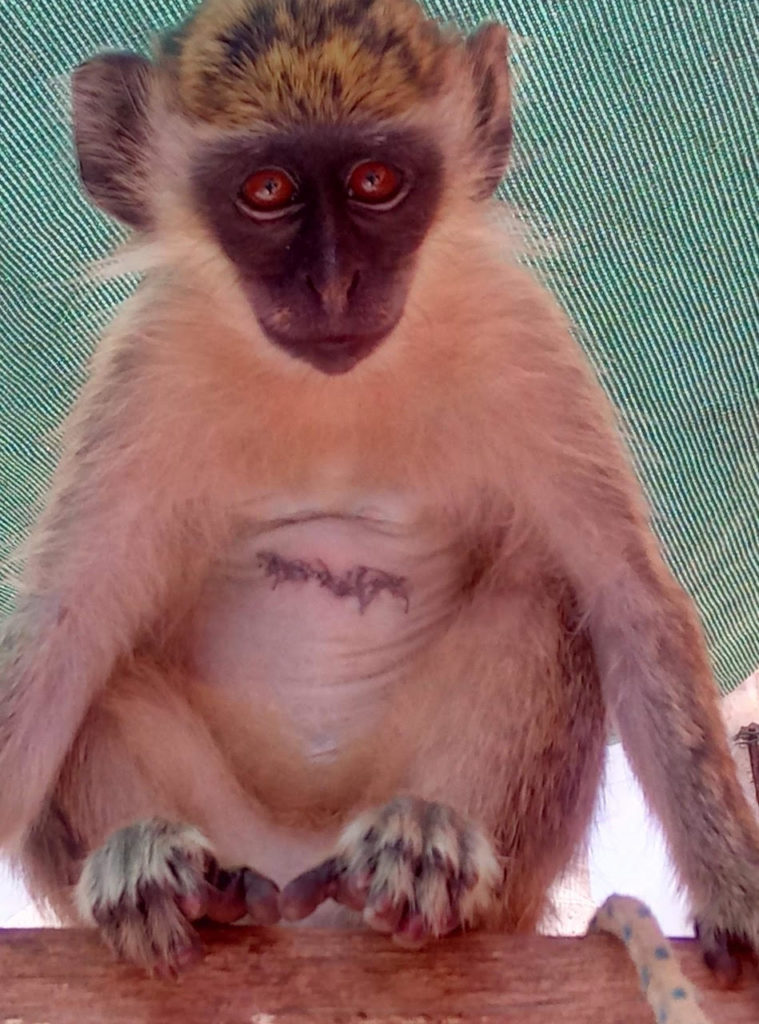
Whenever a case of abuse is uncovered through thorough, evidence-based field investigation, our team directly confronts the owner to mandate immediate improvements to the monkey's living conditions. Should negotiations fail, we notify them of our resolve to press charges for domestic animal abuse. We collaborate with legal experts to actively report abuse, fight to seize the victims, and bring them safely into our Rehabilitation Centre.
We are relentlessly committed to rescuing every abused or stray monkey and bringing them into our Rehabilitation Centre, whether requested by local communities or law enforcement.
Fighting for protective wildlife legislation:
We actively campaign and lobby national authorities to enact robust legal protections for the green monkey in Cape Verde—in full alignment with international treaties—demanding a total ban on the bushmeat trade, severe penalties for cruelty, and an end to keeping monkeys as pets.

OBJ. 3: PROTECTING MONKEYS IN THE WILD, PRESERVING BIODIVERSITY, AND FIGHTING CLIMATE CHANGE
Conducting the first comprehensive monkey census on Santiago Island:
We are tirelessly devoted to shielding monkeys within their natural habitats. Launched in 2022, our primary initiative focuses on mapping and counting the primate population across Santiago Island.
Cape Verde currently lacks a formal census or troop distribution map on Santiago Island. The vital first step to safeguarding these primates in the wild is building a rigorous population census and mapping their habitats. This will unlock data-driven, effective population management backed by reliable, real-time science.
This census must be repeated periodically (every 3–5 years) to evaluate the tangible impact of conservation policies on wild species, forest ecosystems, and local socioeconomic well-being (agriculture and eco-tourism).
Educational school programmes on primate conservation, biodiversity, and climate action:
Fostering knowledge about our wild cousins sparks the passion needed to defend them. Together with educators and scientific experts, we are building an educational conservation kit focused on primate protection, ecosystem health, and the climate fight to deliver impactful programmes across schools and universities nationwide.
Creating a protected wildlife sanctuary for monkeys:
We continuously lobby national authorities to designate a permanently protected forest sanctuary dedicated to monkeys.
Among all biodiversity preservation efforts, establishing well-funded, professionally managed protected areas is universally proven to be the most effective way to safeguard primates while preserving countless co-existing species. True primate rehabilitation culminates in returning them to the wild—ideally within protected zones where their safety is ensured and where they can thrive, wild and free.
Fostering peaceful coexistence between monkeys and farmers:
Retaliatory culling due to crop raiding is the primary cause of monkey mortality. Our team works hand in hand with farmers, raising awareness about the vital role of these primates in local ecosystems while introducing sustainable crop-protection methods. True conservation must protect wildlife while safeguarding the livelihoods of local farming families. Continuous dialogue is paramount, and we are working tirelessly to secure funding for hands-on, permanent training and technical support for farmers.
OBJ. 4: EXPANDING OUR EXPERTISE AND GLOBAL ALLIANCES
Forging powerful conservation partnerships:
We actively build strategic alliances with international foundations and specialized wildlife organizations to strengthen our scientific expertise and amplify global support for Cape Verde’s monkeys.
Joining the global network of primate sanctuaries and rescue centres:
To elevate our impact and foster international knowledge sharing, we are working toward full integration into the world's leading animal welfare and conservation alliances. This long-term mission starts with delivering indisputable, life-saving results on the ground.