Why Protect the Cape Verde Green Monkey?
The monkey population is in decline.
The Cape Verde monkey is a green monkey (callithrix monkey), scientific name "Chlorocebus sabaeus", from the Cercopithecidae family.
Its presence on the islands of Santiago and Brava has been documented by historical sources since the 16th century.
Thus, for more than 500 years, monkeys have lived alongside the inhabitants of the rural towns on Santiago and Brava, the only two islands in Cape Verde where the green monkey is found. It can truly be said that the monkey is an integral part of Cape Verdean culture.
The green monkey was also introduced to the islands of Barbados, and Saint Kitts and Nevis.

Without swift action for better management of the monkey population, it could vanish very rapidly.
This is the alarming finding of our organization, based on an empirical study conducted throughout this first year of activity.
Very little is mentioned in the various status reports and strategic documents of national institutions dedicated to the environment and biodiversity.
The green monkey is not yet considered endangered on the African continent. In 2020, the green monkey "Chlorocebus sabaeus" was classified by the IUCN on the Red List of Threatened Species as "Least Concern".
However, a declining trend in monkey populations is being observed across their natural geographical ranges (Burkina Faso, Côte d'Ivoire, The Gambia, Ghana, Guinea, Guinea-Bissau, Liberia, Mali, Mauritania, Senegal, Sierra Leone).
Routinely hunted or captured, the Cape Verde monkey population is estimated by our organization to be in a state of high vulnerability, facing numerous severe threats with a critically high risk of extinction.
The pressure it faces is mounting relentlessly; a lack of data and conservation initiatives, hunting, trapping, agricultural and urban expansion, an increasingly restricted habitat, deforestation, the impacts of climate change, and more. Multiple threats exert relentless pressure on the species' reproduction and ultimate survival, as monkeys are captured en masse to be sold, killed when causing crop damage in farming areas, or slaughtered for the bushmeat trade.
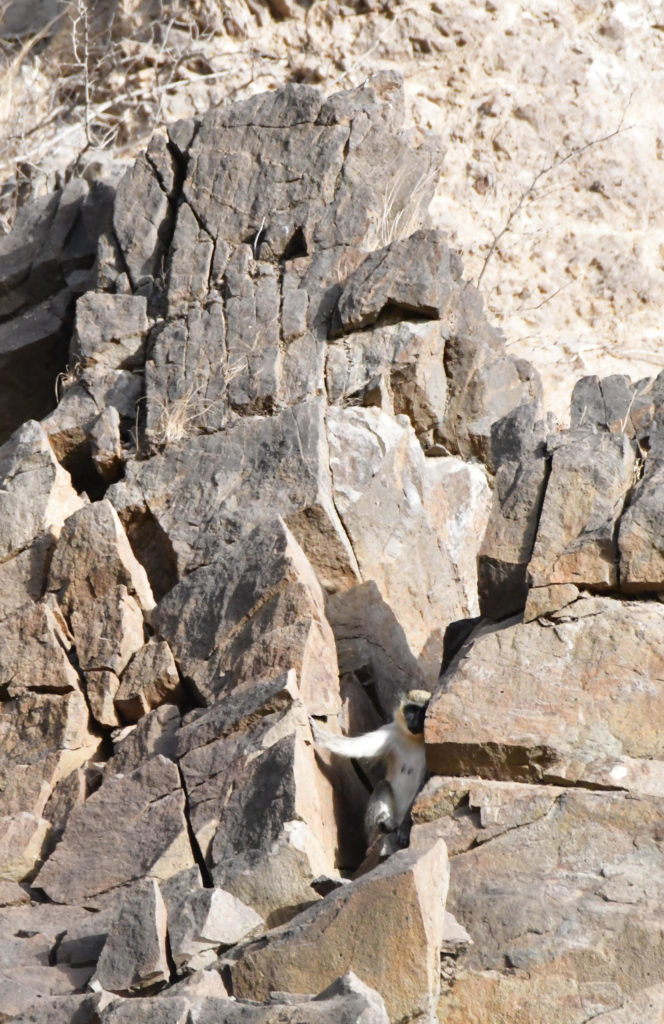
Field observations carried out on Santiago Island by our organization in the monkeys' habitats confirm that troops are far smaller than in the past (now between 10 and 15 individuals instead of 20–30) and these groups are increasingly isolated (population fragmentation).
In the absence of official records, preliminary census observations conducted by our organization across 6 identified habitat zones on Santiago Island (an area of 991 km²) estimate that the green monkey population does not exceed 3,000 individuals. By comparison, on the island of Barbados (covering 430 km²)—less than half the size of Santiago, where the green monkey was introduced during the same era—the green monkey population is estimated at 14,000, and reaches 60,000 on Saint Kitts and Nevis, an island of just 269 km² with 53,000 residents!
One of the first scientific publications on Cape Verde’s green monkeys from 2011 (Introduced mammals of Cape Verde. Hazevoet & Masseti) already highlighted a decline in the monkey population on Santiago: "Although no precise data on past numbers exist, the scarce available information suggests that green monkeys were more common on Santiago in the past than they are today."
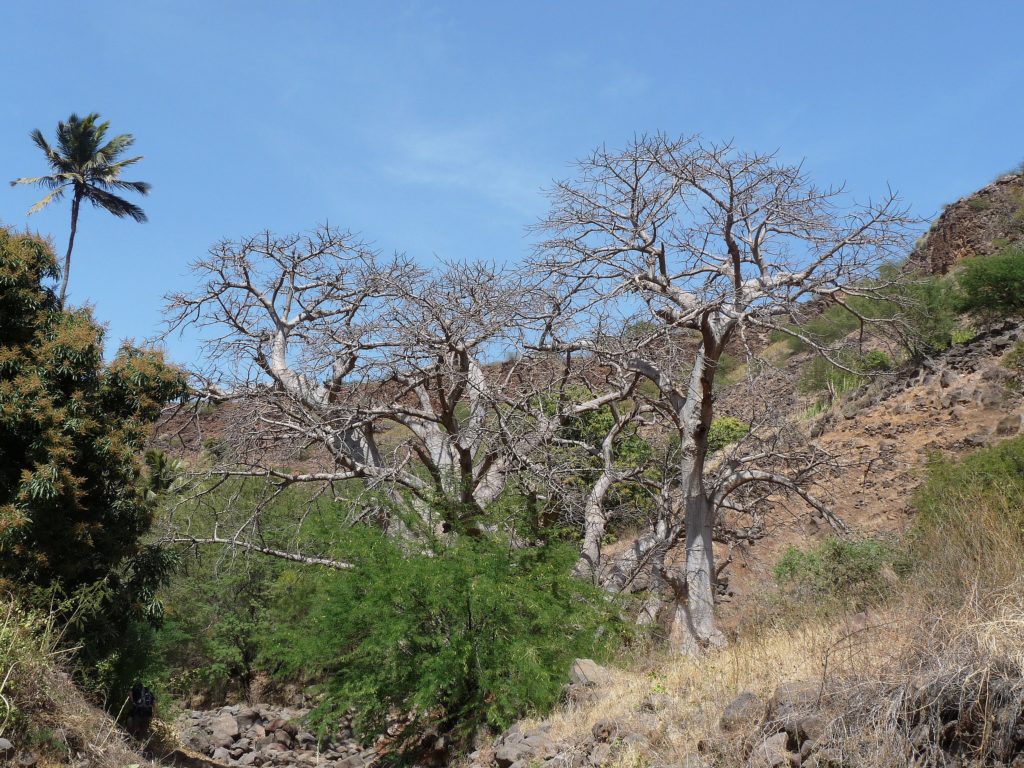
We need them: monkeys are vital to ecosystems
Monkeys are an essential cornerstone of biodiversity
They play a crucial role in forest regeneration and ecosystem health. Forests, oceans, agricultural soils, wetlands, and other ecosystems play a vital part in climate regulation by absorbing a significant share of our carbon emissions.

Protecting monkeys also means saving the forests these primates call home, thereby safeguarding the entire web of biodiversity within these ecosystems.
It is widely recognized that the depletion of primates in any ecosystem triggers disastrous ecological consequences.
Monkeys are essential for forests and ecosystems. The green monkey is often called "the gardener of the forest" because, by feeding on fruits and plants, it nurtures and regenerates forests through the dispersal of vital seeds (and pollination). Without primates, countless plant species could not reproduce, and many forests would simply perish.
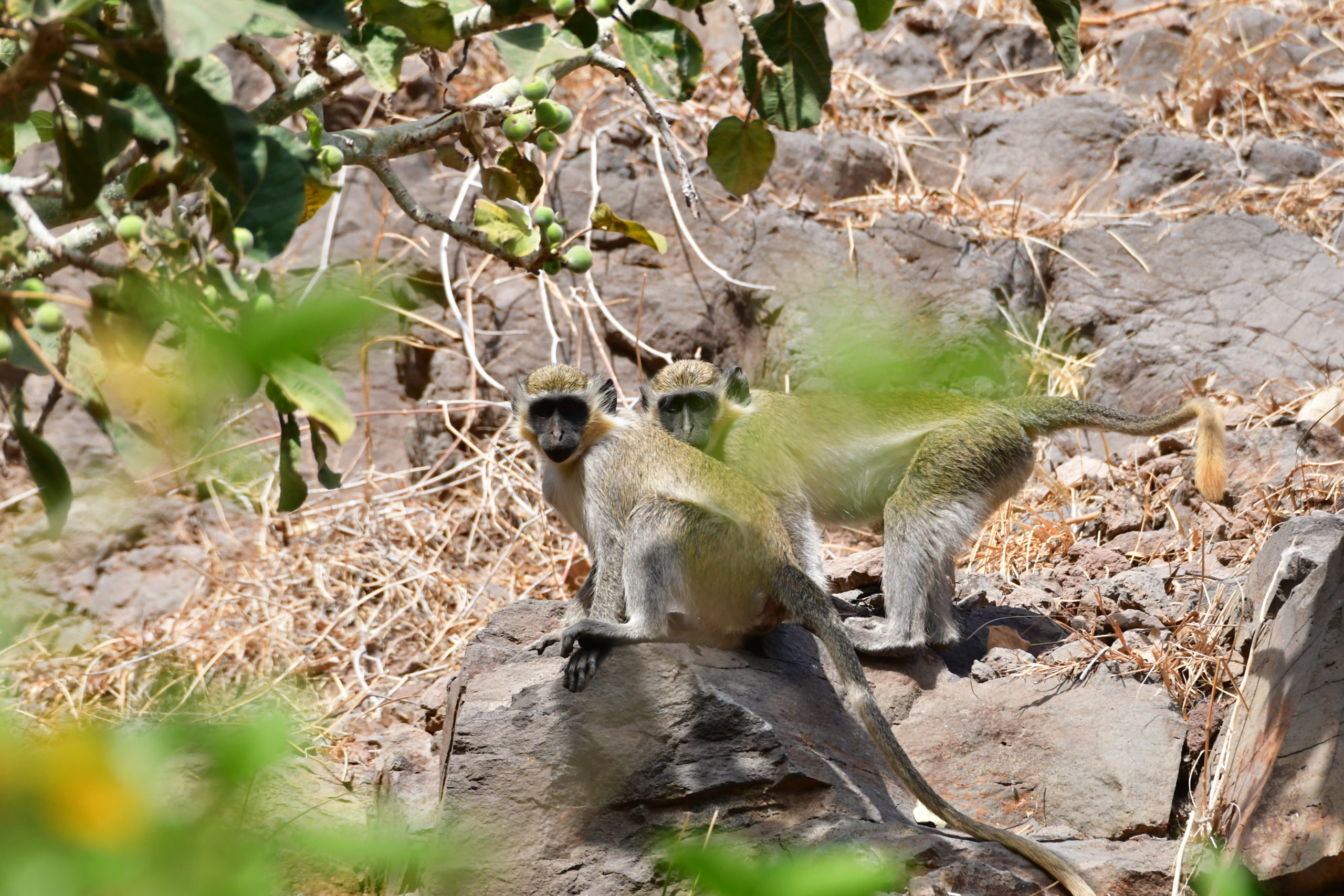
Forests stand at the heart of nature-based solutions and are paramount in our fight against both climate change and biodiversity loss.
Under the relentless pressure of human activity, natural habitats and the wildlife that depend on them are suffering an unprecedented decline.
Forests represent the primary terrestrial reservoir of biological diversity and hold the greatest capacity for carbon sequestration. Despite universal recognition of how vital forests are for our planet and humanity, deforestation and forest degradation continue at an alarming, unacceptable pace.
Protecting ecosystems is one of the most powerful actions we can take to combat climate change.

Climate change, which is already devastating our planet, stands as the single greatest threat to humanity—especially today's youth—and to countless animal species.
Numerous scientific reports have assessed species vulnerability to climate disruption, underscoring that time is running out for the survival of wildlife worldwide (WWF, IPBES, IPCC, UNEP, IUCN).
According to a landmark international study published in 2018 in Science Advances, authored by more than 30 global primatologists, nearly 60% of primate species are threatened with extinction within 25 to 50 years due to human activities, and 75% of populations are already declining. Primate habitats are vanishing under the pressure of agriculture (affecting 76% of species), logging (60%), livestock farming (31%), and infrastructure expansion. Hunting directly impacts 60% of species. These crises are further compounded by pollution and climate change (Science Advances: Impending extinction crisis of the world’s primates: Why primates matter).

Monkeys are ambassadors for nature tourism
Observing monkeys and other wildlife in natural parks and protected areas can unlock new sustainable livelihoods. They hold the power to drive ecotourism and nature tourism across Cape Verde.
The green monkey is beloved by visitors. Highly intelligent, gentle, and familiar with humans, it wins the hearts of tourists who cherish its company, even if it is cheekily dubbed "the thief monkey."
On the island of Barbados, once seen as a nuisance, the monkey is now embraced as a catalyst for tourism growth. Barbados transformed the green monkey into a true national mascot, proving the tangible economic value of wildlife protection. Thanks to dedicated foundation efforts, the green monkey's reputation in Barbados has completely transformed. Today, the vervet monkey is a celebrated icon, and the monkey sanctuary welcomes over 100,000 visitors every year.